Wednesday, October 27, 2010

Interview with Energy Engineer - Laura Rip

 Laura Rip is a co-worker.

What is your work position title?
Energy Engineer

When did you decide you wanted to be an engineer/scientist?
I didn't know what an engineer did until my last year of highschool.  When I heard that engineers got to use math to solve practical problems, I thought that it would be a good fit since I loved math and was good at it.

What kind of things did you like to do growing up that you think influenced your decision to go into engineering?
I always was interested in how things work or how things were made.  I remember 'Mr Rodgers' often had a segment on his show about how some item, such as tennis shoes was made.  I thought it was so interesting what all goes into the common things that we use.  Also, my mom is a seamstress and I learned from early on that there is so much you can make yourself.  My siblings and I would make our own patterns and sew up bags, stuffed animals, quilts and clothes.

What kind of work do you do in Antarctica?
I am an energy engineer who thinks of things to do around the stations to save electricity, heat and water around station.  I'll help get low flush toilets or showheads or automatic faucets (like at airports) installed around station.  I also install meters to track how much fuel each building takes to support itself. 

What would you say to anyone thinking about going into engineering?
There are so many different kinds of engineering: Test engineers who find the best ways to test materials and newly design equipment, building engineers who specialize in facilites and how to make them work efficiently, design engineers who turn ideas into something that can work whether it's a new doornob or a space station, research engineers who get to figure and try out new technologies, and the list goes on.  Its worth talking to lots of different kinds of engineers to see what they do, since it is easy to find SOMETHING you enjoy doing.

What school did you go to and how long did it take you to get your degree?
I went to Calvin College in Grand Rapids, Michigan.  I graduated in 4 years.


Tuesday, October 26, 2010

Every Day Life At McMurdo

 The Galley is where meals are served. It is cafeteria style.

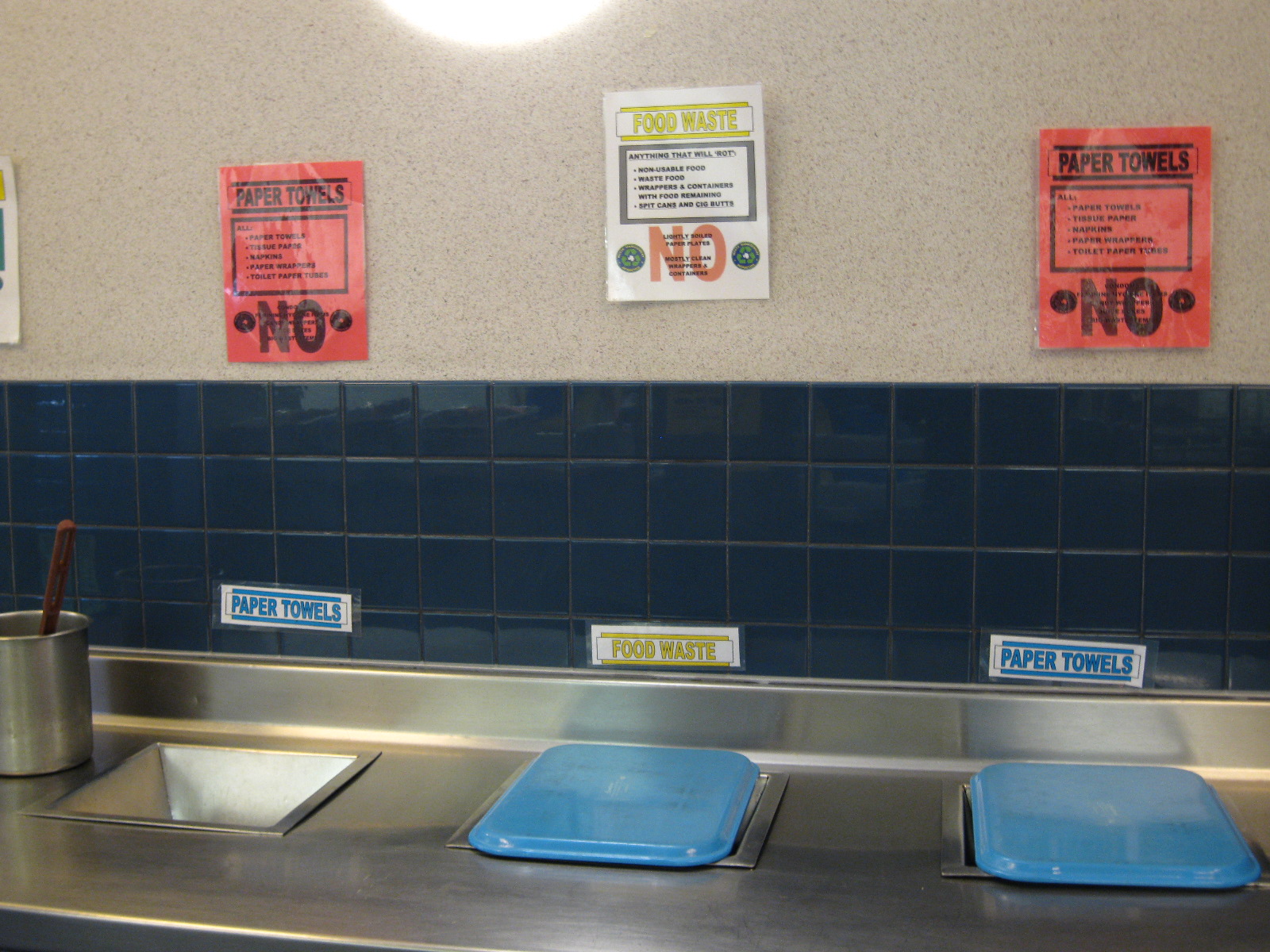
Waste Mananagement is very important in Antarctica. All waste needs to be sorted and shipped back to the United States for processing. After each meal each person scrapes leftover food into the bin for Food and puts paper napkins in the paper towel bin.

 This is the area where I work. I mostly have a desk job. There are times when I need to go out about town to check different sites.

This is a photo of the inside of the store near the Galley. It is open most times that the Galley is open. Snacks, souvenier items and toiletries are for sale here. There is also a library of CDs, VHS tapes and DVDs for borrowing.


This is another photo of the Galley. Meals are served for a couple hours for breakfast, lunch, dinner and mid-rats. Mid-rats is short for Midnight Rations which is a special meal for the night crew.

Sunday, October 24, 2010

Interview with Aerospace Engineer - Colleen Higgins


Aerospace Engineer Colleen Higgins is a co-worker.

What is your work position title? Senior Systems Engineer, McMurdo Multimission Communications System Lead

When did you decide you wanted to be an engineer? I wanted to have a job in science since I was little; marine biology, astronomy, you name it.  My Dad is an engineer and worked in the aerospace industry and was very science oriented so I was exposed to all sorts of interesting things from a young age.  However, I did not know I wanted to be an engineer until I started applying to college my senior year in high school.  It shocked both me and my Dad!

What kind of things did you like to do growing up that you think influenced your decision to go into engineering?  As I mentioned, I showed an interest at a young age because of the exposure I received so my parents would take me places that could grow my interest from the zoo and aquariaum, to the Boeing Museum of Flight, to air shows in Canada, to the Science Center in Seattle.  A lot of our family activities centered around subjects that were technical in nature.  We also spent a lot of time at historical sites, which is also important in engineering to know where you have come from to help you know where to go.

What kind of work do you do in Antarctica?  I work on the next generation environmental satellite system that will downlink data to McMurdo Station before sending the data to the US.  I am on the team to install the antenna as well as processing equipment to support those capabilities.

What would you say to anyone thinking about going into engineering?  It's really hard work with a really big payoff.

What school did you go to and how long did it take you to get your degree?  I went to the University of Colorado, Boulder and received a Bachelor of Science and Master of Science in Aerospace Engineering.  It took me 6 years total to receive both degrees.

Interview with Mechanical Engineer - Mark Bartram

Mark Bartram - Mechanical Engineer, Professional Engineer

I work with many other engineers and scientists in Antarctica. Mark is a co-worker.

When did you decide you wanted to be an engineer?
Junior year in high school. Everyone I knew encouraged me to be an engineer.
Once thought about being a lawyer. Liked math classes.

What kind of things did you like to do growing up that you think influenced your decision to go into engineering? I liked to take things apart to see how they worked. I fixed bicycles and cars.

What kind of work do you do in Antarctica?
Increase the efficiency of mechanical systems like making sure equipment is running at the correct speeds for ventilation and heating. I also work on renewable energy possibilities.

What would you say to anyone thinking about going into engineering?
Get as much information as possible when it comes to learning about engineering. A general knowledge of broad subject areas will help to get a better understanding of the connections in engineering.

What school did you go to and how long did it take you to get your degree?
Colorado School of Mines. It took 6 years to get my degree without student loans. I had to take time off to earn money to continue to go to college.

Wednesday, October 20, 2010

CONCORDIASI Balloon Launch

The main goal of the CONCORDIASI project is to provide validation data to improve the usage of polar-orbiting satellite data over Antarctica. I was able to see the launch from my office window.

 The launch site is directly below the balloon.

This is a close up view.

Monday, October 18, 2010

Aviation At McMurdo

 One of the things I really enjoy at McMurdo is watching the flights land and take off. I am an aviation fan and am always looking outside whenever I hear a plane or helicopter. This is a photo of the two baslers out on the ice runway. They are converted DC-3 planes that have no hydraulic lines for maneuverablility and can therefore be used at South Pole in colder conditions than the C-130 planes. The minimum temp for landing a Basler is -55 degrees F.
 Here is a photo of a C-17 at the ice runway with the basler planes off to the right. I got to watch from my work office the C-17 take off from the ice runway and then bank to the left as it headed off to Christchurch.

Here is a photo of the C-17 with a loader taking out the cargo. The C-17 always keeps its engines running while passengers and cargo are off loaded. They have workers who make sure the passengers stay well away from the engines as they depart.

Saturday, October 16, 2010

Photo of McMurdo

 This is a picture of McMurdo. The hill in the left corner is called Ob Hill. Ob is short for Observation. The bright blue building is the Galley. The Galley is where we eat our meals and some even have dorm rooms there. My room is in Building 209. It is the last brown building in the row of brown buildings on the left center of the picture.
 The mountain in the background of this photo is Mt. Erebus. It is one of three active open lava lake volcanos in the world! Many vulcanologists like to study this area. It is about 80 miles away from McMurdo. The two women in the photo are working on the NPOESS project with me. They are satellite communication engineers.
 Here is a photo of the new ice pier on the left and the ice runway.

 Here is a photo of the main Antarctica continent. The white poles you see at the bottom of the photo are part of the Super Darn science project.

Here are the wind turbine generators at one of the hills.